A Diamond Detour in Borneo: Inside the Artisanal Mines of Cempaka
Where Borneo's diamonds actually come from
Kalimantan's diamonds are geologically among the strangest in the trade. Every stone pulled from the rivers around Cempaka is alluvial — recovered from ancient gravel terraces, not from a kimberlite or lamproite pipe that anyone has ever found. Decades of exploration have failed to locate a primary source anywhere on Borneo, which has earned these stones a nickname among researchers: the "enigmatic" Sundaland diamonds.
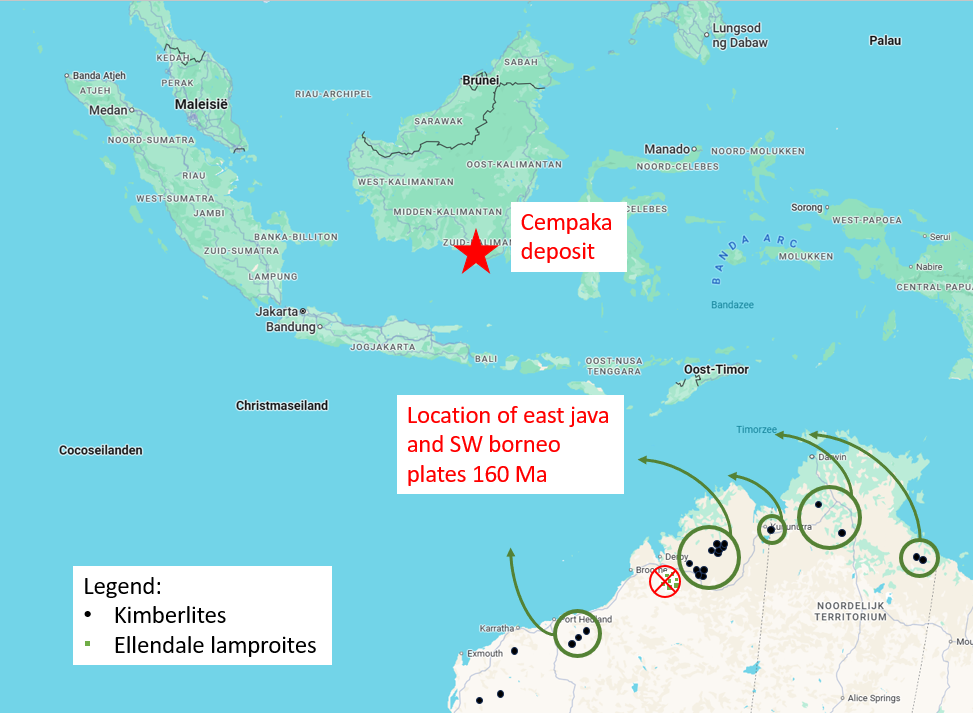
source: Google maps
The best-supported theory, based on zircon provenance studies, traces them back to the North Australian Craton. During the Paleozoic, the block of crust that is now southwest Borneo sat on Australia's northwestern margin, as part of Eastern Gondwana. It rifted away in the Early Jurassic — roughly 190 million years ago — drifted north as an independent terrane, and eventually collided with fragments of East Asia in the Cretaceous, welding itself into the Borneo we know today. The diamonds crystallized deep in that original Australian mantle root, were carried to surface by long-vanished volcanic activity, then eroded, transported, and re-deposited into the river gravels miners still dig by hand near Cempaka. It's worth being precise about what's fact here and what's working theory: the Gondwana-rifting history of the Schwaner block is well documented geologically; the exact identity and location of the original volcanic source rock is not — it's a genuine open question in economic geology, not a settled one.
From sultanate trade goods to a modern cutting town
Diamonds have been worked in this part of South Kalimantan for centuries, making Cempaka one of the oldest continuously exploited diamond fields in the world, alongside Golconda in India. Historically the stones moved through the trade networks of the Banjar sultanate, and later drew the attention of Dutch colonial surveyors cataloguing the Indies' mineral wealth. What's changed least is the extraction method: today, as centuries ago, diggers sink shafts by hand — some 15 meters deep — reinforced with wood, and pass baskets of gravel up to be panned in woven rattan or wooden sieves. What has changed is the endpoint of the trade: instead of feeding regional courts, rough now flows into Martapura, which has built itself into Indonesia's cutting, polishing, and retail hub for everything the mines produce.
A honeymoon with an unscheduled detour
I should disclose the circumstances. This trip was, technically, a side quest off my honeymoon in Bali — a fact my wife was not thrilled about, and which she declined to accompany me on. (For the record: I regret nothing, though I am told there is a ledger being kept.)
On 22 July I flew from Bali to Banjarmasin to go find these mines for myself. My starting point was a tip from Kunming Tay, a fellow member of the Young Diamantaires — a network of industry people from around the world — who had visited the Borneo mines with his father a few years earlier and pointed me toward Martapura as the place to start.
Martapura: separating the real from the rest
The next morning I went straight to the Martapura gem market. It is not an easy place to read. A large share of the shops are selling synthetics, heavily included material, obvious fracture-filled stones, or beryllium-diffused corundum, with little to no disclosure. It took some walking before I found the corner where the actual diamond dealers operate (Decimal Degrees: -3.408926, 114.849270).
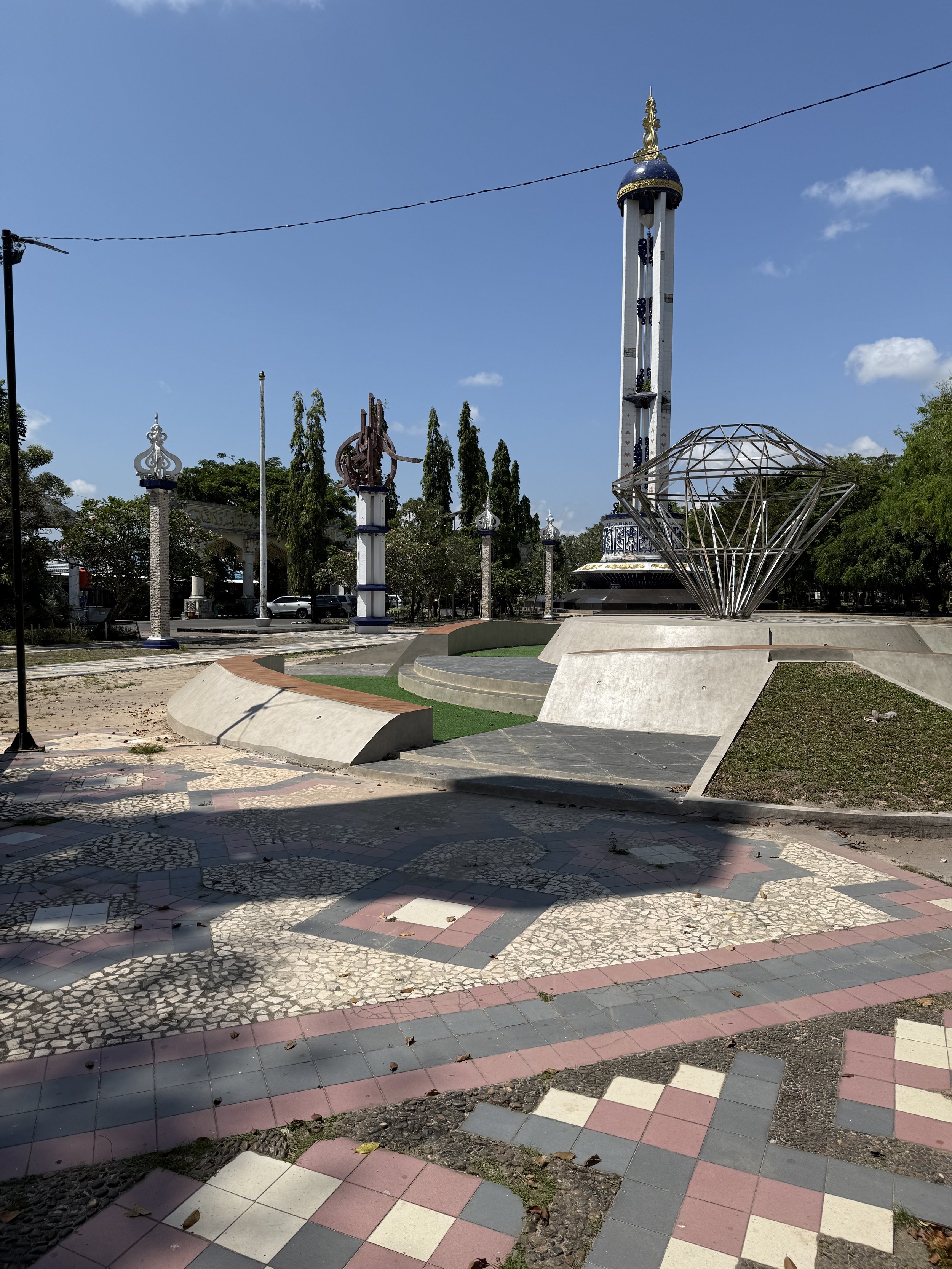
The square just in front of the clothing shops, gemstone and jewelery shops.
The rhythm of that corner is dictated by the mines: runners come up from the pits below Cempaka and reach the market at around 1pm with the day's rough. Pricing was running somewhat above the general decline in global rough prices seen over the months before summer 2025, though still within a reasonable range — and quality, while inconsistent, was generally decent. You will also be worked hard by people trying to sell you cut stones. Most of that cut material is either heavily included or poorly proportioned, which I'd attribute to local cutters working with dated equipment and limited training — though I'll flag that as trade consensus rather than something I confirmed myself, since I didn't visit a cutting workshop to verify it firsthand. One useful rule of thumb: if someone offers you a diamond that looks unusually clean and well-cut for the setting, treat it with suspicion — that combination is a common tell for synthetic material being passed off as local rough-turned-goods. For that reason, I limited my analysis to rough only, which was still priced well above what the same material would fetch in Antwerp.
Cempaka itself: standing over the source
In the afternoon I went to the Cempaka mining area (Decimal Degrees: -3.507276, 114.841339). You can take a local taxi and also ask him to wait there until after your visit but do agree on the price before. It should not be that much as you can compare the prices on the Grab-app (Indonesia’s driver app) to get you from A - Z.
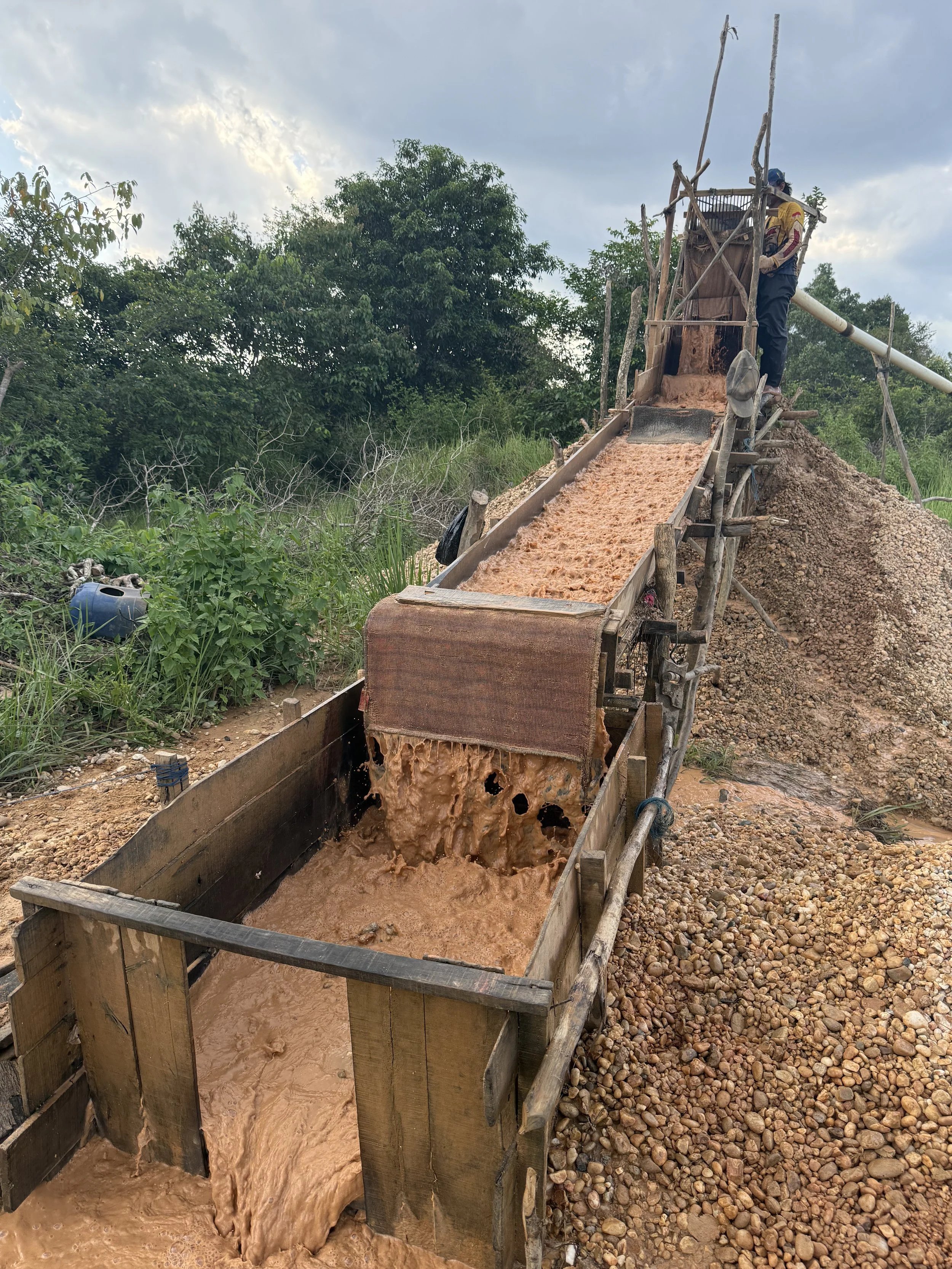
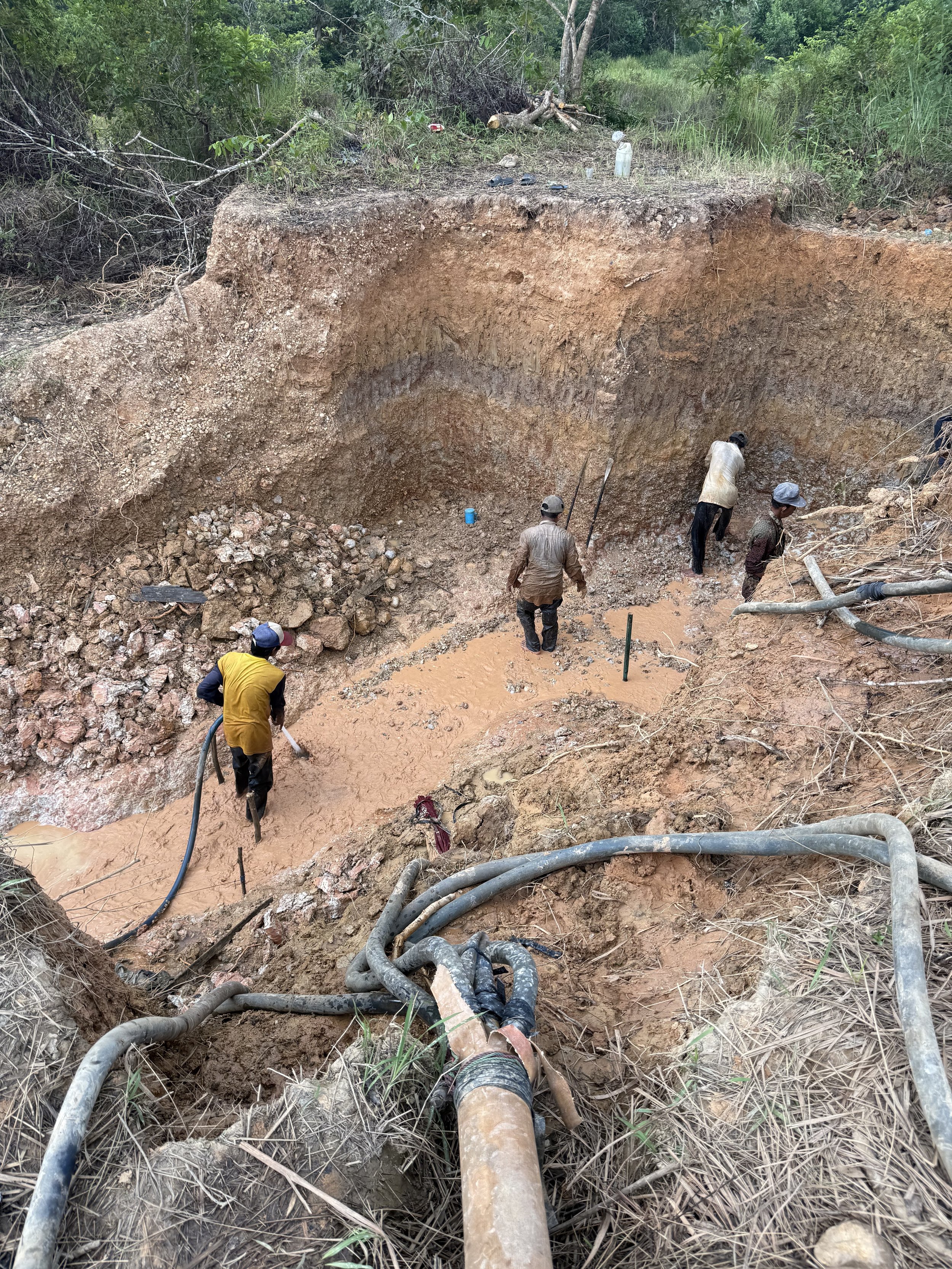
What I found was a textbook alluvial operation, and nothing about the site struck me as hazardous. One miner had a genuinely attractive white stone, eye-clean, but even there the rough was priced at roughly a 40% premium over what I'd expect to pay. I did trade for some leftover small included cut diamonds, more useful for creative jewelry work than as investment goods.
Miners washing away the gravel at the bottom of the pit.
Washing plant to extract the diamonds from the gravel.
Buying rough there in any real quantity was never actually on the table for a different reason: while Indonesia has in fact been a Kimberley Process participant since 2005, that status covers formally certified export channels through the government's designated authority — it does not extend to loose rough handed over informally by an individual miner or market runner with no certificate attached. Without that paperwork, the stones can't legally cross into an EU member state like Belgium, regardless of the seller's honesty. That's a compliance detail worth being exact about, since it's easy to conflate "the country participates in the scheme" with "any stone from that country is importable", they are not the same thing.
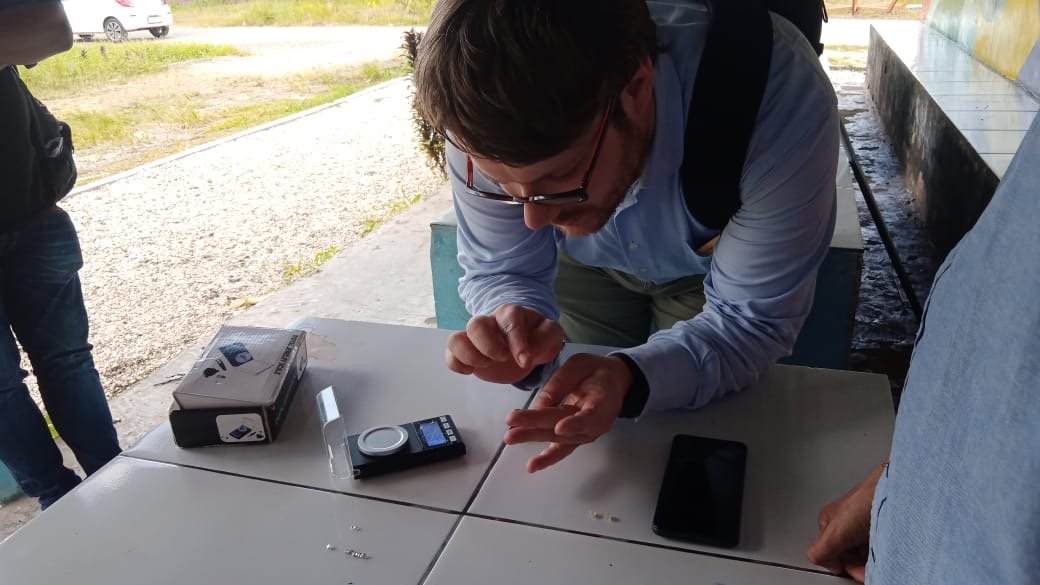
People showing rough goods next to the end of the paved road.
The takeaway for buyers and collectors
Cempaka's alluvial output leans toward pinkish-brown material; a genuinely clean white stone is uncommon and, in my experience, most likely gets bought up by the mine's trusted regular buyers before it ever reaches a market stall. If you're serious about sourcing directly from a mine for business, understand what you're taking on: no one on site speaks English, you'll be approached by intermediaries before you're anywhere near the pit, trust has to be built with the miners themselves, and even then you should expect a premium simply for not being local.
For the traveler rather than the trade buyer, the calculus is simpler. You will have no shortage of people offering you "genuine" cut stones. Favor pieces with visible natural inclusions over anything suspiciously clean, do a little homework on pricing before you negotiate, and treat whatever you bring home as what it realistically is: a well-earned holiday memento, not an investment-grade acquisition.